Electrostatic Discharge (ESD)
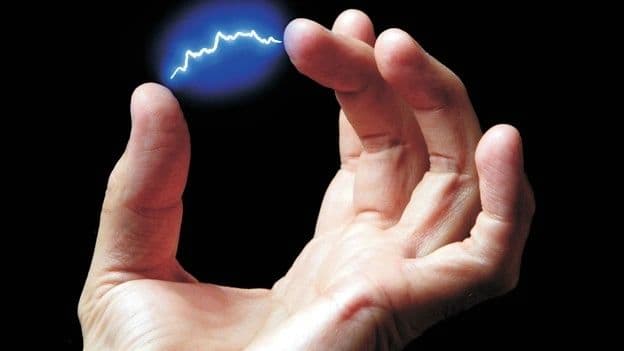
Electrostatic discharge (ESD) occurs when an electrostatic charge is transferred from one object to another, often from a human to a metal surface. While this phenomenon is common in everyday life, ESD can have serious consequences in various industries, leading to economic losses, infrastructure damage, and even loss of human life.
Therefore, a proper ESD control program is essential for any industry facing issues related to ESD. ESDMC specializes in managing electrostatic discharge and offers a range of consultancy services, including training, auditing, and ESD control solutions.
1. Can the power ground be used as an ESD ground?
There are three options for ESD grounding:
- Best Option: Dedicated ESD ground (specifically designed for ESD control).
- Next Best Option: Equipment ground as ESD ground (shared between equipment and ESD control).
- Satisfactory Option: Power ground as ESD ground (least preferred for ESD control purposes).
2. Can people differ in their body capacitance?
- Yes, body capacitance can vary from person to person depending on factors such as body size, environment, and clothing.
3. Do conductors get charged with static?
- Yes, static charge can accumulate on isolated conductors. When a conductor is insulated from the ground or another object, it can hold a charge, which can be discharged upon contact with another conductive material.
4. How many heel straps should one wear?
- Two heel straps should be worn when movement is involved. Each time a foot leaves contact with the ground during walking, static charge can accumulate. Heel straps ensure continuous grounding. another conductive material.
5. Is bonding different from grounding?
- Yes, bonding refers to creating an electrical connection between two or more conductive objects to equalize their potential. Grounding, a form of bonding, specifically involves connecting one of those objects to the earth continuous grounding. another conductive material.
6. Should ESD footwear be worn on bare feet?
- No, wearing socks is sufficient. ESD footwear should be worn over socks to allow conduction between the ESD sole and the foot. The sweat on the skin creates a conductive layer to help dissipate the static charge. connecting one of those objects to the earth continuous grounding. another conductive material.
7. What is electrostatic charge?
- Electrostatic charge is an imbalance of electric charge within or on the surface of a material, either positive or negative.
8. What is static electricity?
- Static electricity refers to the accumulation of electrical charges on the surface of an object, usually resulting from friction between materials.
9. What is ESD (Electrostatic Discharge)?
- ESD is the sudden transfer of electrostatic charge from one object to another, often through direct contact or a spark, usually occurring when a charged object comes in contact with a grounded or less charged object.
10. How is static charge generated?
- Static charge is generated through friction or contact between materials, a process known as triboelectric charging. For example, rubbing a balloon on your hair or walking across a carpet can generate static charge due to friction.
11. What is the process of static charging?
- Materials are neutral, with an equal number of protons and electrons. When two materials come into contact or are rubbed against each other, electrons may be transferred, leaving one material positively charged and the other negatively charged. This is due to the frictional energy causing electrons to move from one material to another.
12. Does static charge affect only electronics?
- No, while electronics are highly sensitive to ESD, other effects include: Humans: An uncomfortable zap when touching a metal object like a door knob or car frame.
- Inflammable environments: Sparks from ESD can cause fires in environments with flammable materials, such as chemicals, powders, or printing inks.
- Explosives: ESD can cause ignition or detonation in sensitive explosives like fireworks or ammunition.
13. What are the two modes of failures due to ESD in electronic devices?
- Latent Damage: The device continues to operate but fails to meet its specified performance, similar to a person who can walk but not at their usual pace.
- Catastrophic Failure: The device completely fails, akin to a person collapsing. environments: Sparks from ESD can cause fires in environments with flammable materials, such as chemicals, powders, or printing inks.
- Explosives: ESD can cause ignition or detonation in sensitive explosives like fireworks or ammunition.
14. How do static charges transfer from one object to another?
- Static charges can transfer via contact or induction. When a charged object comes into contact with a conductive material, the charge is transferred. Alternatively, if a conductive object is brought near a charged object, it can acquire a charge through induction.
15. How are static charges controlled?
Effective control of static charges involves the following practices:
- Grounding all conductive materials, including equipment chassis.
- Neutralizing charges on insulators.
- Providing ESD-protective clothing like wrist straps, heel straps, and conductive aprons.
- Using grounded, static-dissipative work tables and floors.
- Regular checks of ESD equipment such as wrist straps.
- Keeping static-generating materials (e.g., plastic, foam) away from sensitive areas.
- Training personnel on the principles of static generation, accumulation, and discharge.
- Performing regular ESD audits and implementing corrective actions.
16. Is conductive material safe for static-sensitive areas?
- Conductive materials are safe in static-sensitive areas as long as they are grounded. Ungrounded conductive materials can store static charge and discharge it when a path to ground is found, potentially damaging sensitive components or causing hazardous sparks.
17. Can ESD be totally eliminated?
- No, static charge generation is a natural phenomenon, especially from movement (triboelectric effect). However, ESD can be managed effectively by limiting charge buildup and controlling discharge rates to safe levels.
18. Can the application of ESD to process industries be elaborated?
- ESD control is especially challenging in process industries (e.g., chemicals, pharmaceuticals, and explosives) due to the unpredictable static behavior of powders and liquids. These materials may exhibit conductive, insulative, or dissipative properties at different times, complicating the static control process. In such cases, manufacturers should work with material suppliers to identify alternatives that are both suitable for production and compliant with ESD control requirements.